Enhancing the Shelter at the Women’s Community Centre, Perumbakkam
The project aims to strengthen the capacities of the Women’s Community Centre in Perumbakkam, which supports more than 5,000 women resettled from riverbank communities in Chennai. The programme of activity has two critical components:
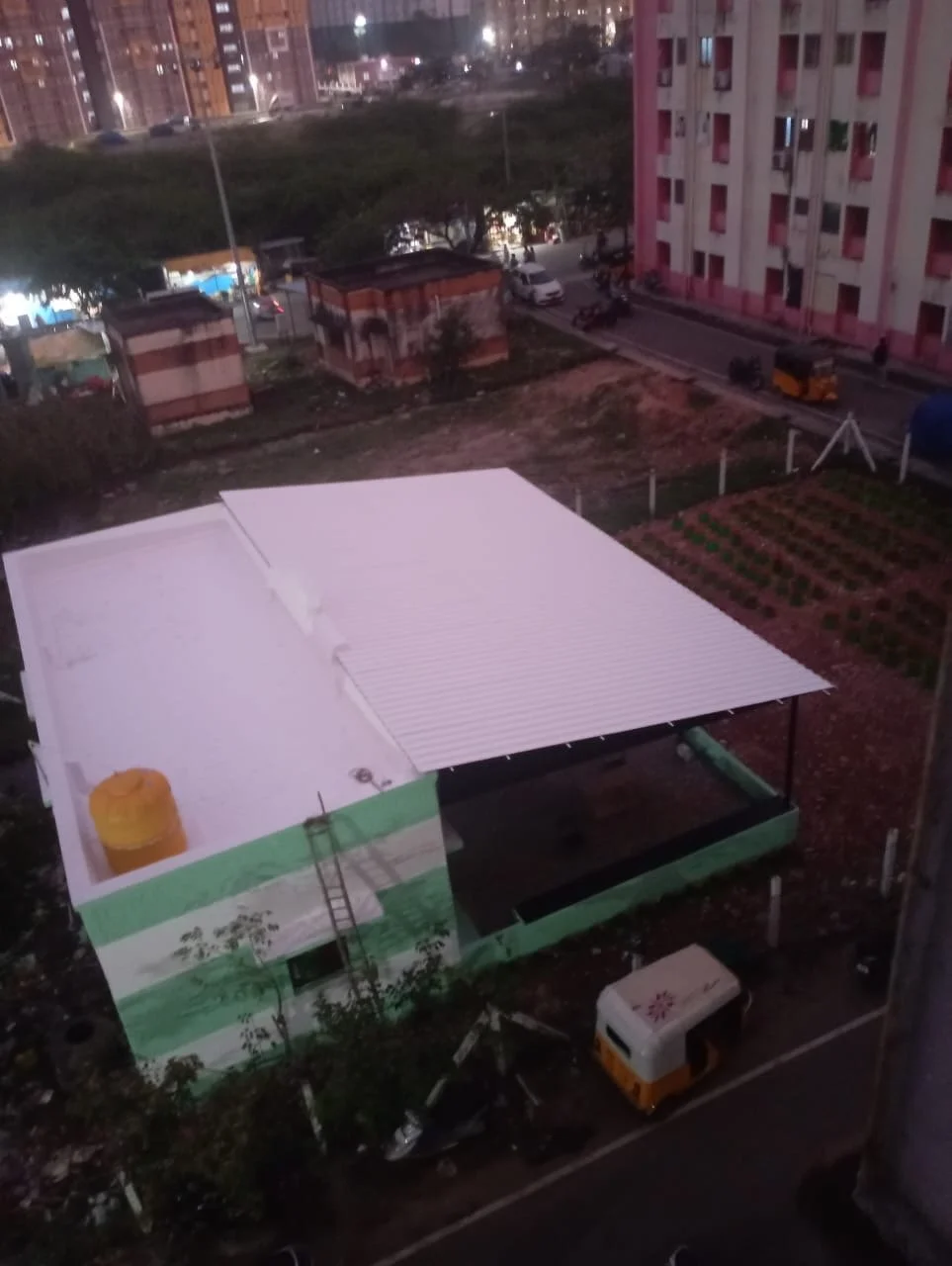
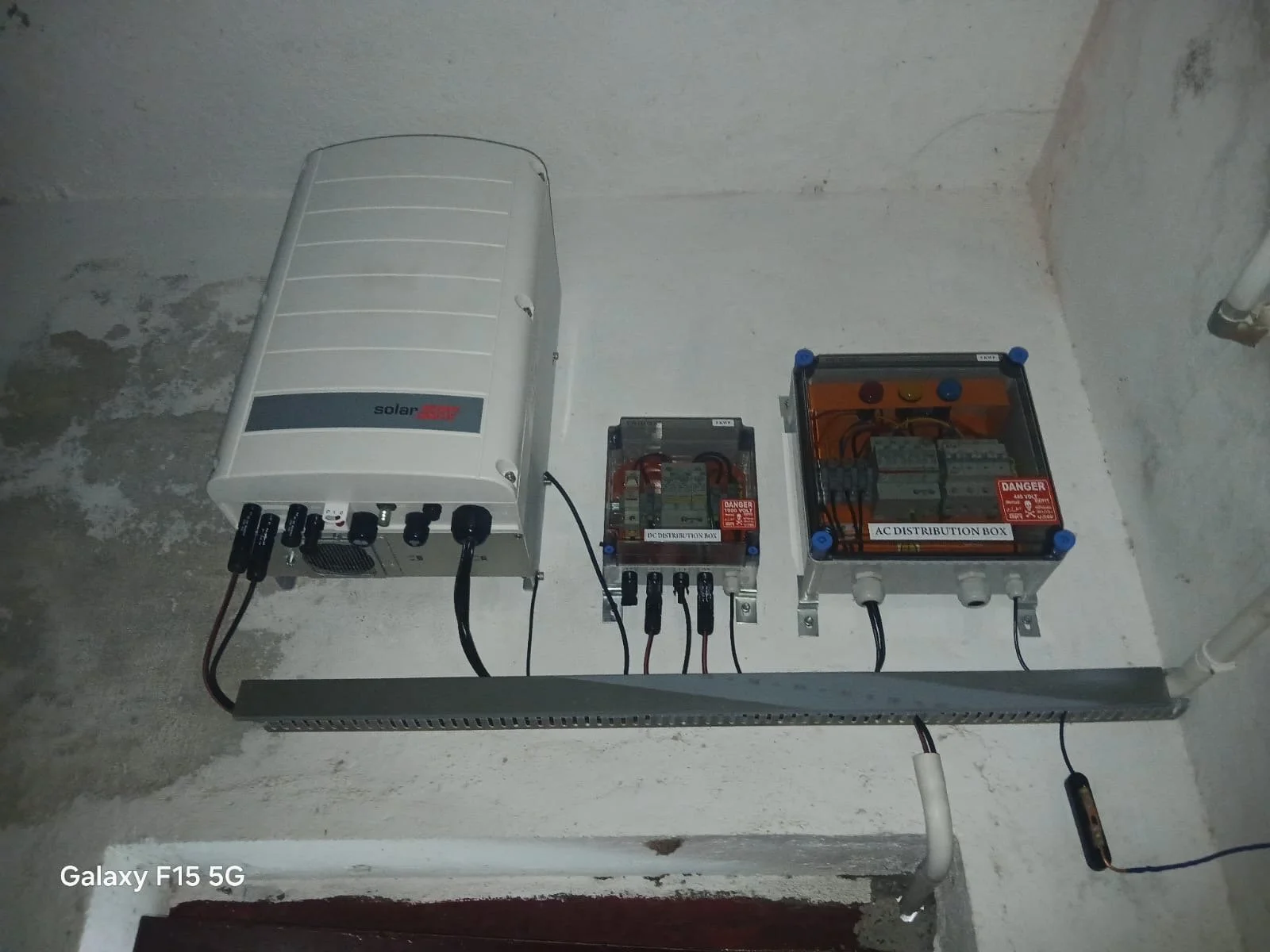
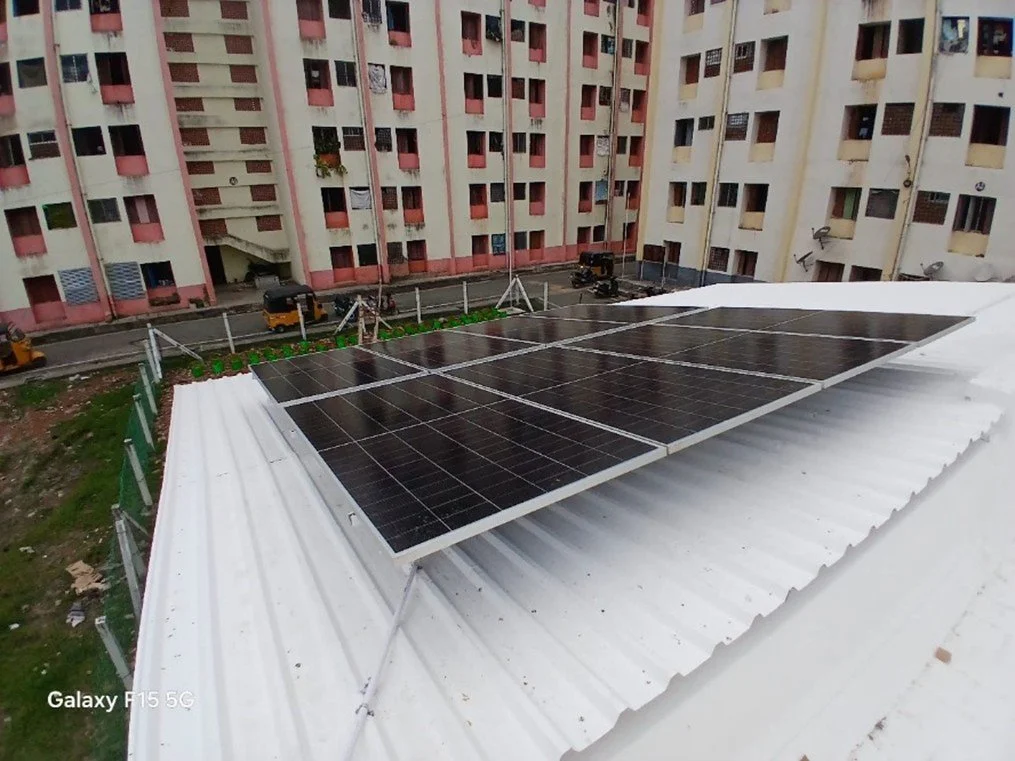
Installation of a solar power system: The solar unit will ensure uninterrupted electricity supply for lighting, fans, and digital tools used during legal aid workshops, welfare access sessions, and training and networking programmes. This will reduce dependence on grid power and minimise power disruptions during programme delivery.
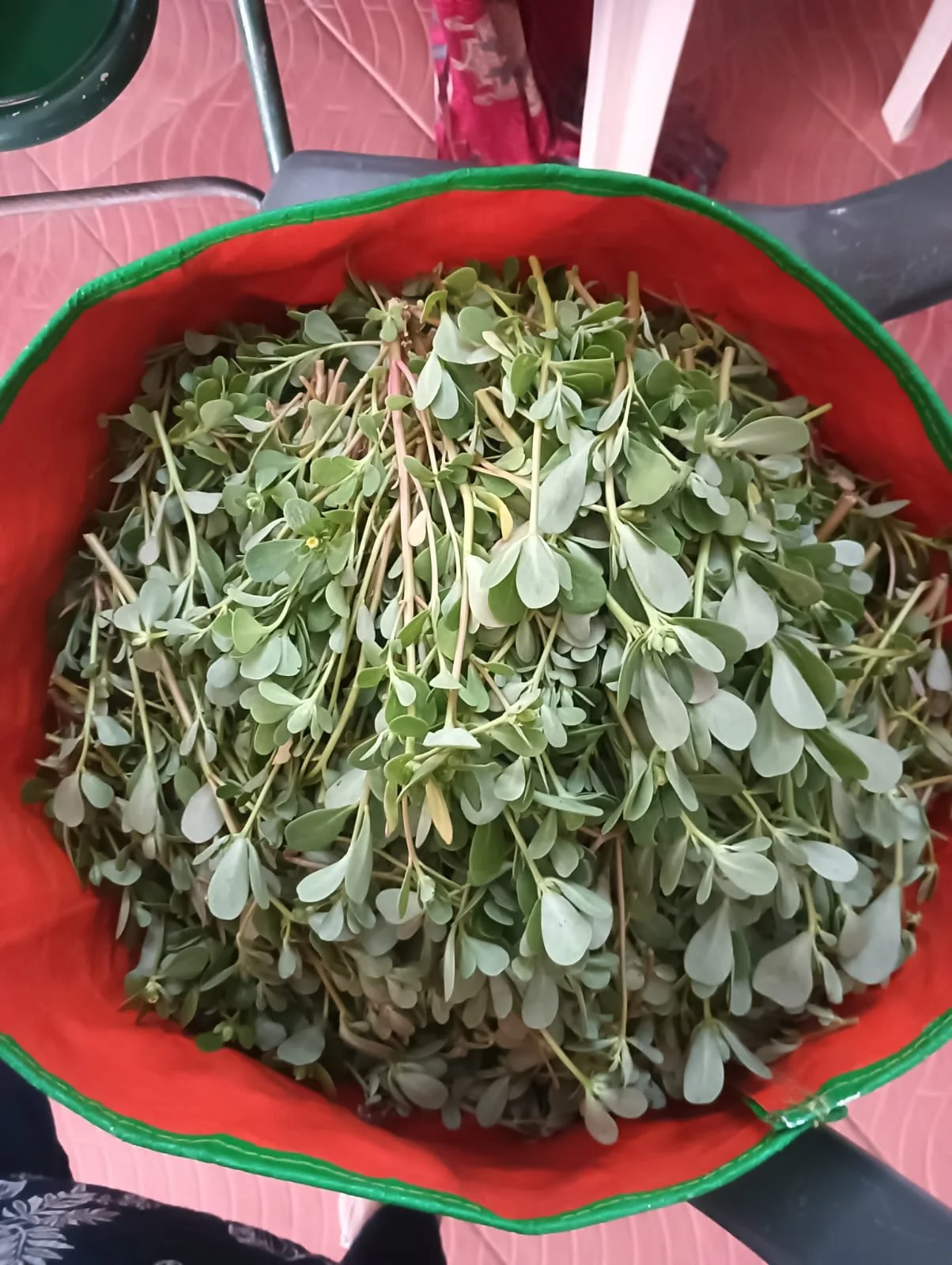
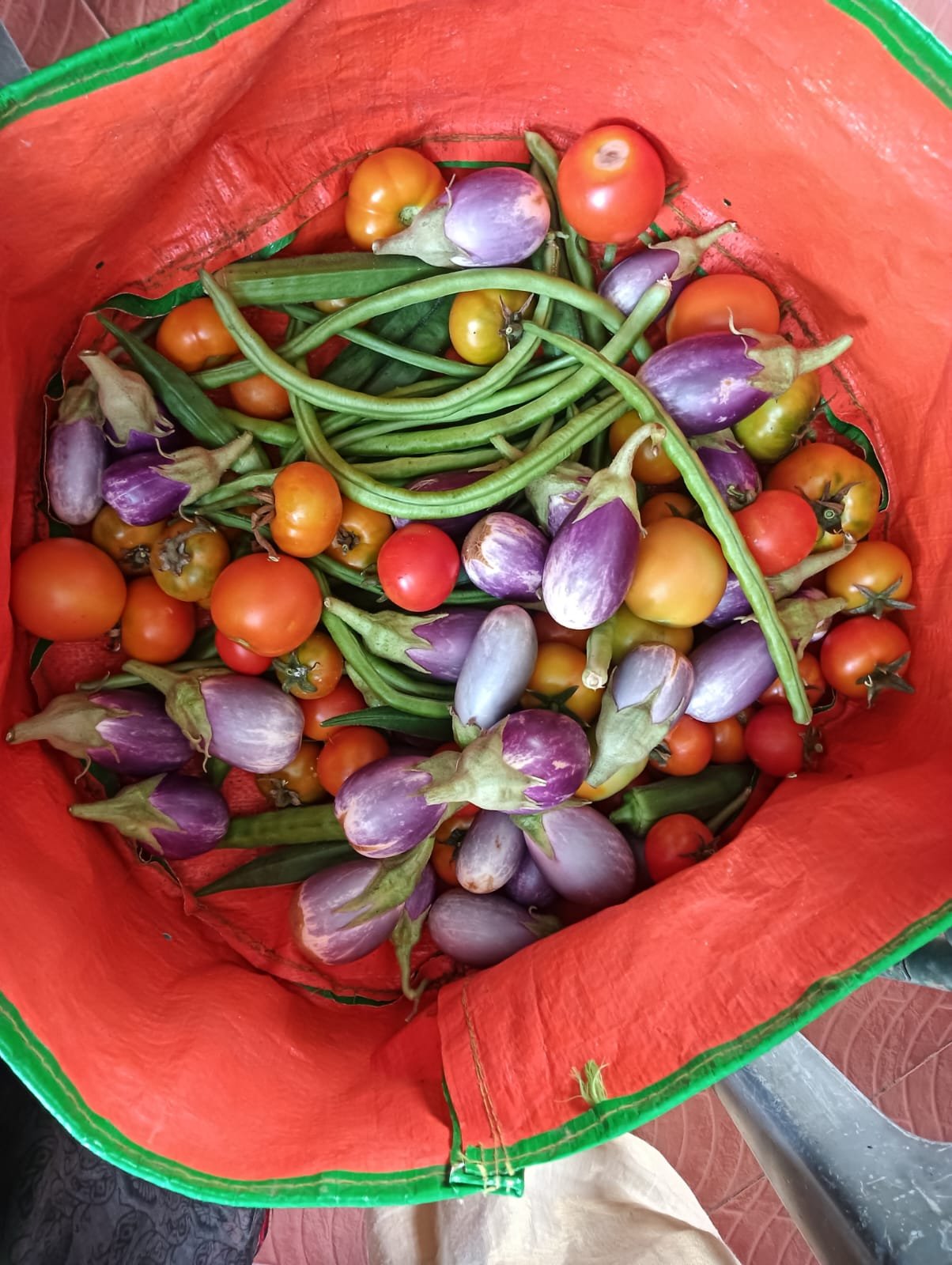
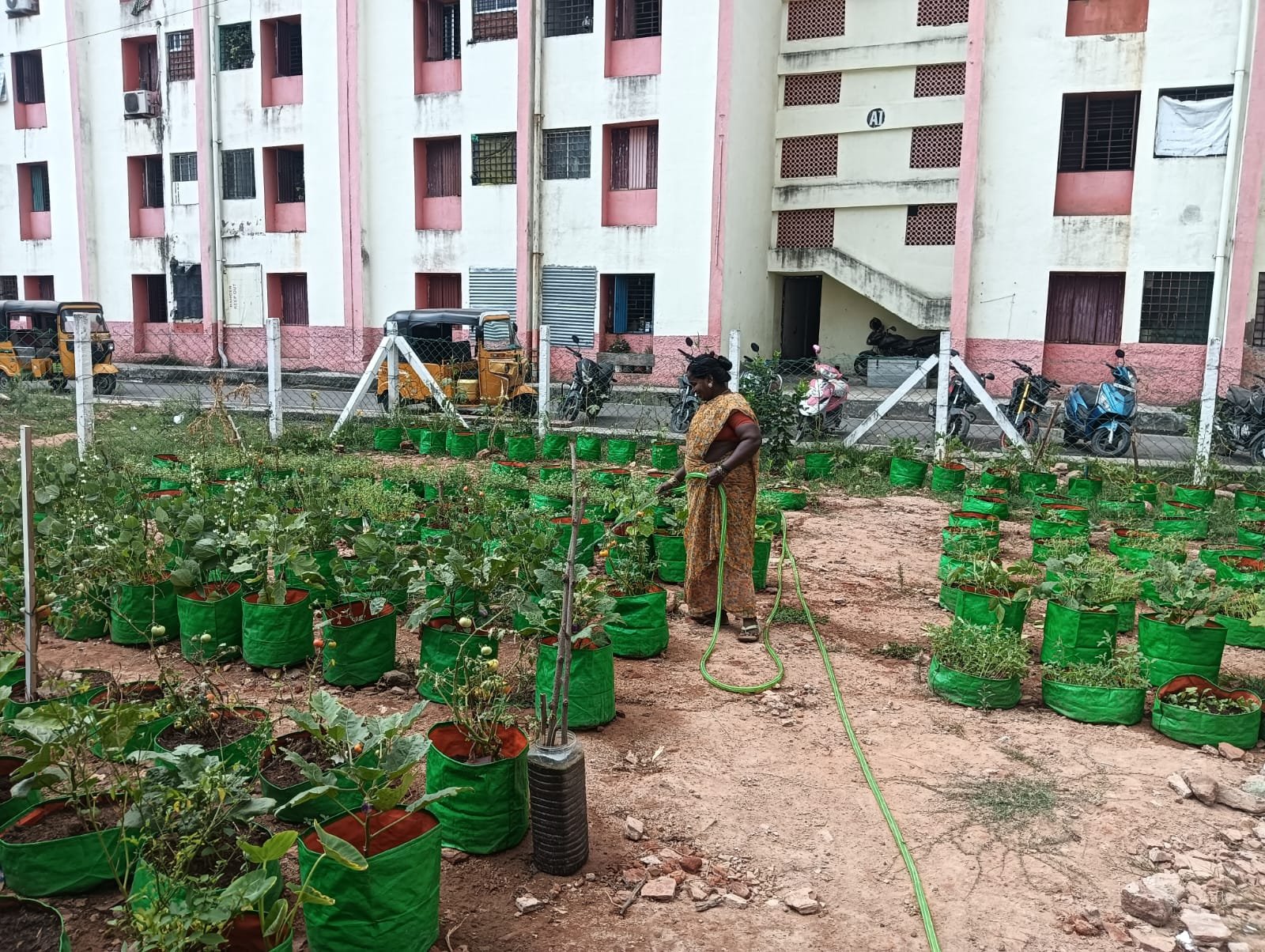
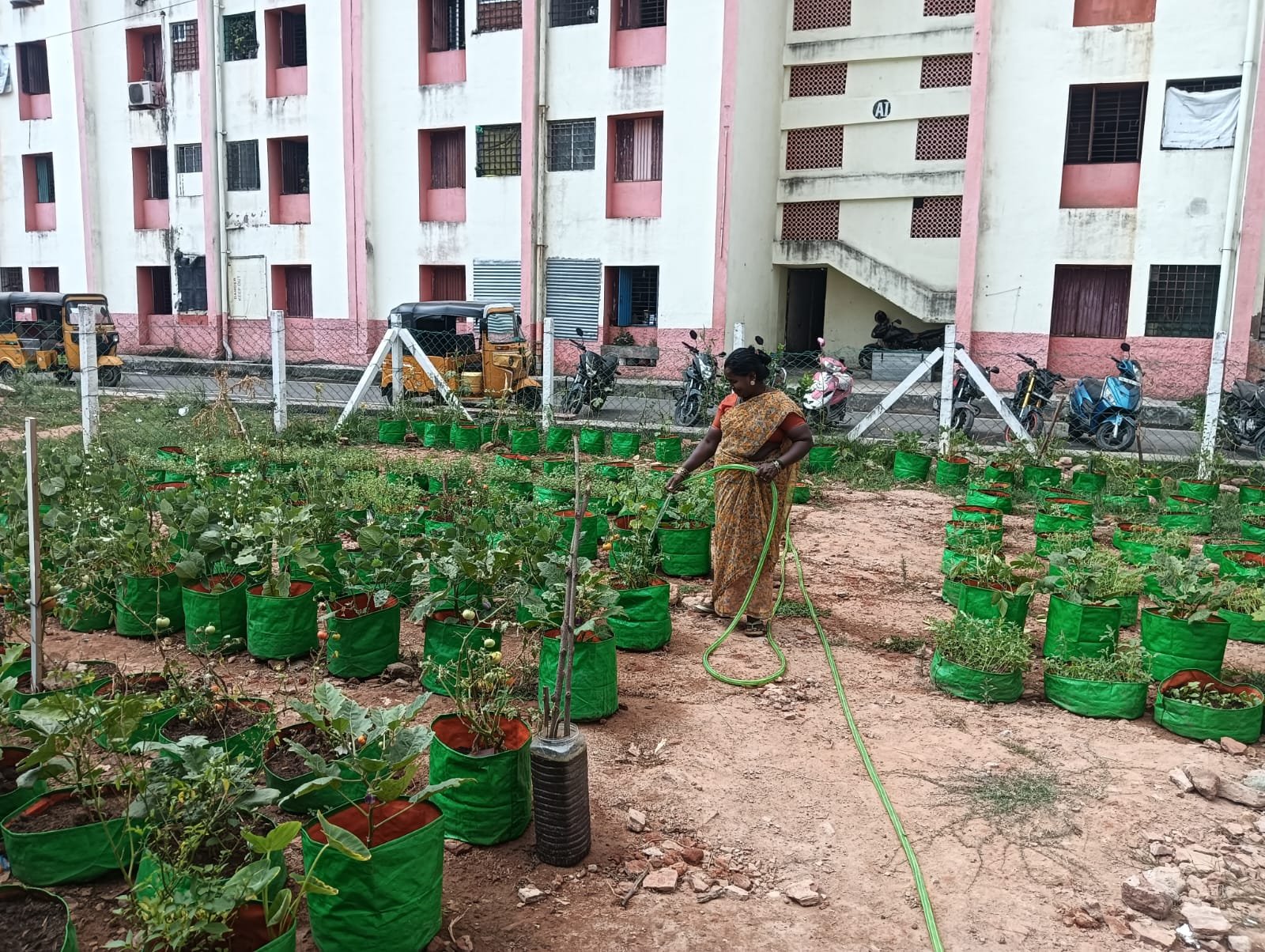
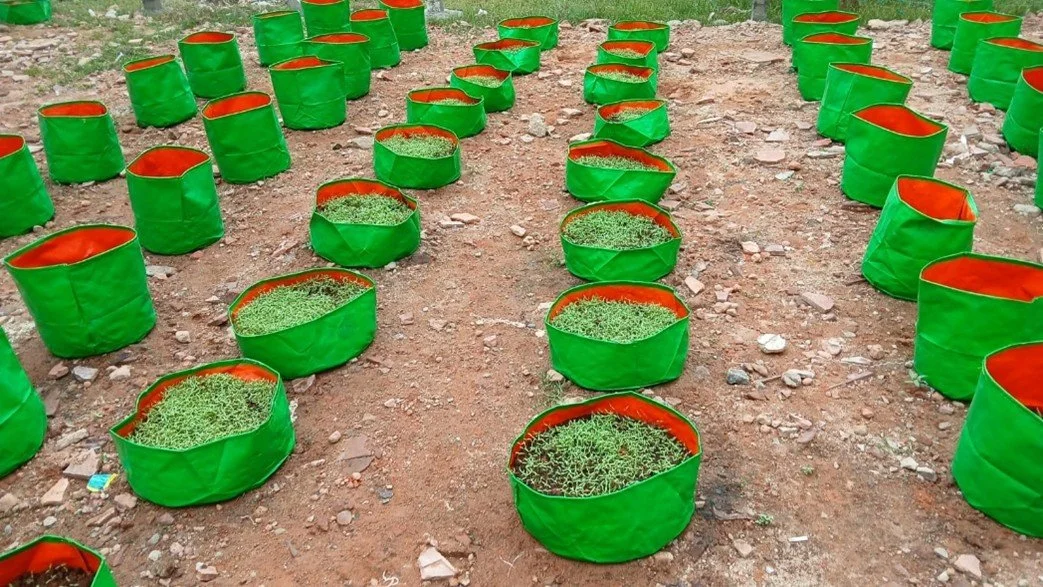
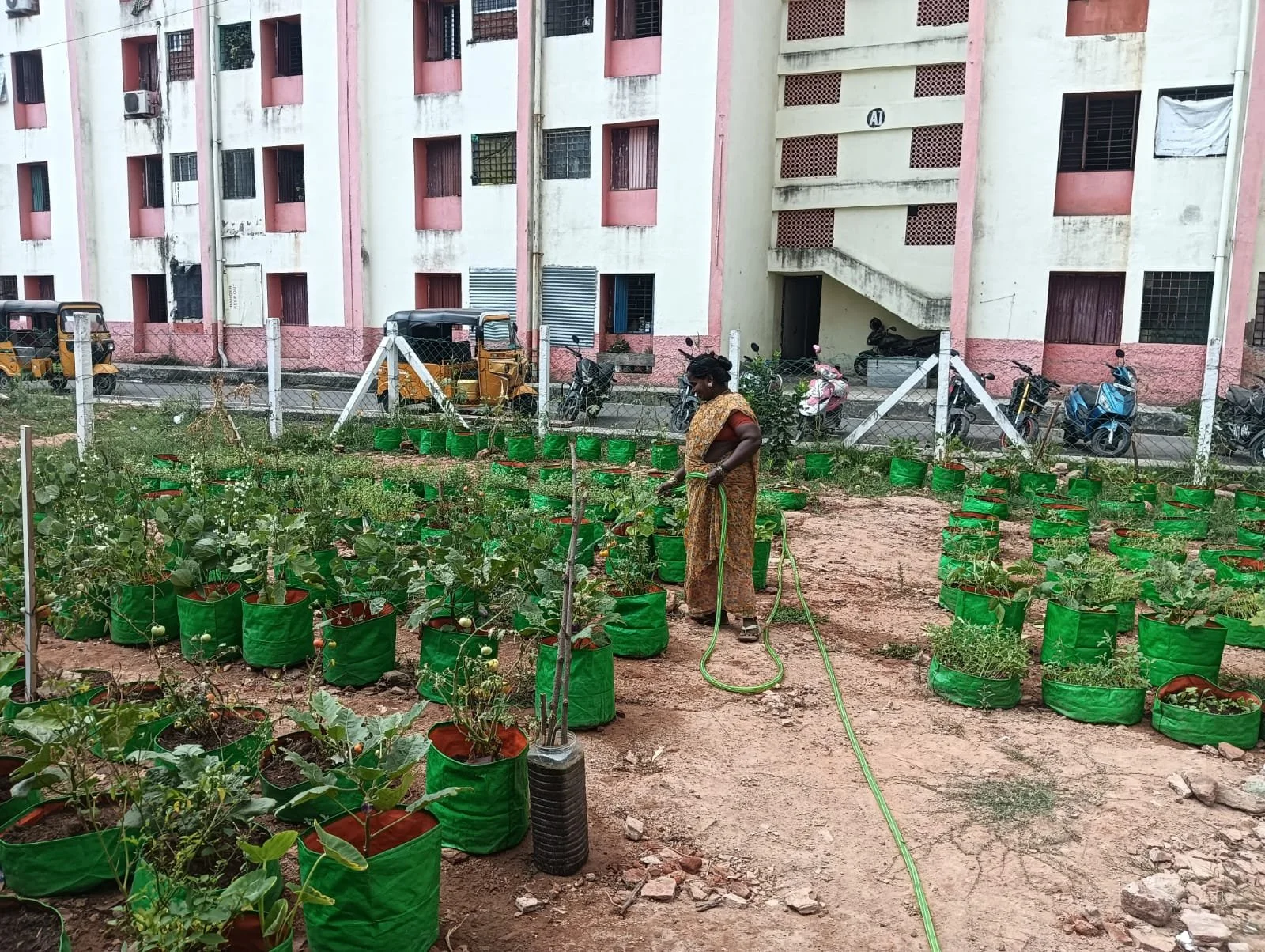
Creation of a vegetable garden: An organic vegetable garden on the premises will build awareness of safe, chemical-free food practices and help generate small incomes. The initiative will impart skills in traditional cultivation methods using indigenous seeds and climate-resilient techniques, helping women to learn how to grow greens and vegetables in rooftop or backyard spaces.
Improving the Women’s Community Centre
The centre plays a crucial role for women evicted from riverbanks and resettled in a flood-prone, under-serviced township. As domestic workers (employed as cleaners in homes), many of these women have lost jobs because of resettlement. In addition, the communities have poor access to healthcare and other basic services. Frequent power outages disrupt the centre’s sessions on critical government entitlements and skills training, making a solar system essential for reliable programme delivery. Additionally, many women feel alienated in their resettlement district. Establishing a vegetable garden will create a green, productive space that fosters belonging, stewardship, and social cohesion. The garden will also increase awareness of safe food and health practices and teach traditional cultivation skills for home gardens that can generate small incomes for families.
The need for solar power and a vegetable garden emerged through regular engagement with women and youth at the centre. During legal aid sessions, welfare camps and training workshops, participants reported frequent disruptions caused by power outages and discomfort from lack of ventilation. Several women also expressed interest in learning to grow vegetables using safe, traditional methods. The trust has 5,000 members. Despite its limited infrastructure, the centre regularly hosts sessions with 500 women – a number likely to increase, given the continual process of evictions and resettlement of riverbank communities in Perumbakkam. The centre’s ongoing engagement signals strong community demand and underlines the need to improve the space’s reliability and sustainability.
The centre fosters community resilience by preserving cultural practices, facilitating peer learning, and providing a safe space for women to share knowledge and experiences. The organic vegetable garden will support traditional methods of growing greens and vegetables, tapping into women’s indigenous knowledge, and using native seeds and time-tested cultivation practices that are naturally climate-resilient.
Installing solar power will ensure uninterrupted welfare access, legal aid, and training sessions, strengthening support systems for women. The vegetable garden will foster social cohesion, belonging, and dignity by creating a shared, productive green space. Both interventions build community agency, improve wellbeing, and nurture meaningful connections among resettled women.
Solar energy will reduce dependency on fossil fuels and improve clean energy resilience in an area prone to power outages. The organic vegetable garden, developed using climate-adaptive methods, will demonstrate low-cost, sustainable farming practices including composting and the use of organic pesticides, building awareness and capacity for environmental stewardship within the community.
The solar unit will reduce electricity costs, improving the Women’s Centre’s financial sustainability. A better-functioning centre will enhance access to basic income schemes, government entitlements, and other welfare benefits. The garden aims to inspire small-scale livelihoods in urban farming, composting, or herbal cultivation that can be replicated in home spaces for interested women. The women will receive training and organic seeds for two years, helping them to become self-sufficient.
Project Outcomes
This project is ongoing - CHEC back later for updates!
-
Perumbakkam, Tamil Nadu, India
-
October 2025 - Present
-
1. Installation of a solar power system: The solar unit will ensure uninterrupted electricity supply for lighting, fans, and digital tools used during legal aid workshops, welfare access sessions, and training and networking programmes. This will reduce dependence on grid power and minimise power disruptions during programme delivery.
Creation of a vegetable garden: An organic vegetable garden on the premises will build awareness of safe, chemical-free food practices and help generate small incomes. The initiative will impart skills in traditional cultivation methods using indigenous seeds and climate-resilient techniques, helping women to learn how to grow greens and vegetables in rooftop or backyard spaces.
-
Ongoing Project
Project Photos